
Secure Data Destruction Services in Sydney and Australia-Wide
When a computer, server or backup drive reaches the end of its life, the data on it does not simply disappear. Old drives tossed in a drawer or sent to landfill can still hold client records, financial files, passwords and personal photos that the right tools can bring back.
NexusByte provides secure data destruction for businesses and households from our Sydney workshop, with options to suit organisations right across Australia. Whether you need a single laptop drive wiped before recycling or a rack of decommissioned servers physically destroyed, we match the method to the media and the sensitivity of what is stored on it.
Our three destruction pathways cover every situation: free recycling with secure software erasure, degaussing for magnetic drives and backup tapes, and physical shredding for storage that must never be readable again. Each job follows a documented, secure process from hand-over to final disposal.
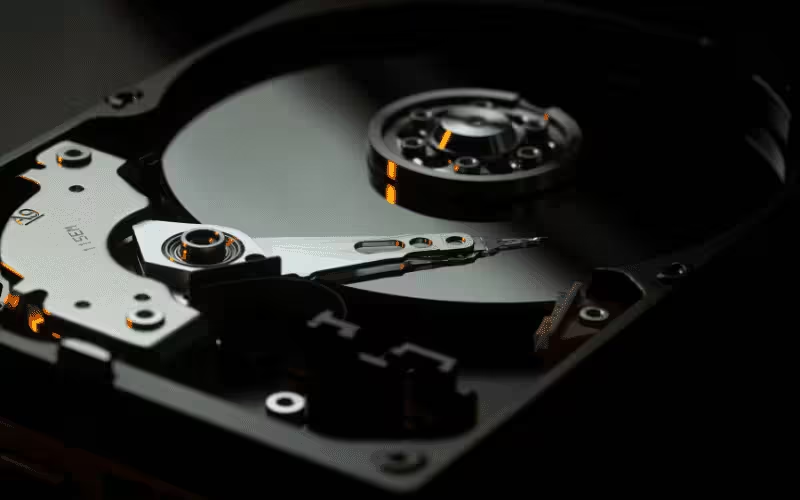
Our data destruction services include:
Free hard drive and SSD recyclingSecure software-based data erasureDegaussing for drives and backup tapesPhysical hard drive and SSD shreddingBusiness decommissioning supportResponsible e-waste disposal
The Right Destruction Method for Every Type of Media
There is no single correct way to destroy data. The best method depends on the storage technology, the sensitivity of the information, and what you plan to do with the hardware afterwards.
A magnetic hard drive, a flash-based SSD and an LTO backup tape each store data differently, and each responds differently to erasure techniques. Software wiping keeps hardware reusable, degaussing scrambles magnetic media in seconds, and shredding reduces a device to fragments that can never spin up again. We start every engagement by asking what the data is, where it lives and how certain you need to be that it is gone. From there we recommend the simplest method that genuinely achieves that outcome, rather than upselling destruction you do not need.
Method matched to media type
Honest advice on what each technique achieves
Options for reuse, recycling or total destruction
Documented chain of handling
Suitable for single drives or bulk lots
Whatever the mix of drives, tapes and devices you are holding, we can lay out your options clearly and handle the rest.
Built for sensitive data. Engineered for certainty.
Our destruction services support any organisation or household that holds information worth protecting, in Sydney and around the country.
Small businesses
Medical practices
Legal firms
Accounting firms
Schools and colleges
IT departments
Home users
Managed service providers
Aged care providers
If information leaving your control would be a problem, we can make sure it never does.
Your Data, Protected. Guaranteed.
We safeguard and recover your data with clear pricing and a no-risk promise on recovery work.
Free Data Assessment

Fixed Quote

No Recovery, No Fee

Fast Turnaround

Your data stays backed up, secure, and recoverable when you need it most.
Request a Free QuoteBuilt for results
What Secure Destruction Delivers
Proper data destruction is about removing risk before it becomes an incident. Here is what our clients walk away with.
Data rendered unrecoverable
A documented destruction record
Hardware recycled responsibly
One less privacy risk to manage
Old storage stops being a liability the moment it is handled properly.
Our Data Destruction Process
Every job, from one laptop drive to hundreds of decommissioned units, moves through the same documented steps.
1. Talk Through Your Situation
2. Secure Hand-Over
3. Destruction Carried Out
4. Verification and Records
5. Responsible Disposal or Return
Choose Your Data Destruction Service
Free Hard Drive & SSD Recycling
The no-cost way to retire old drives safely. We securely erase your hard drives and SSDs, then route the hardware into responsible e-waste recycling.
Includes:
- Secure software-based erasure
- Suits working drives and everyday data
- No charge for standard recycling
- Responsible e-waste handling
- Ideal for homes and small offices
Degaussing for Hard Drives & Tapes
Powerful magnetic destruction for hard drives and LTO or DLT backup tapes. Degaussing scrambles the magnetic layer so the media can never be read again.
Includes:
- Works on drives and backup tapes
- Fast processing of bulk lots
- Effective even on failed drives
- Honest advice on media suitability
- Documented handling throughout
Hard Drive & SSD Shredding
Physical destruction for storage that must never be recoverable. Drives and SSDs are reduced to fragments, so the media itself ceases to exist.
Includes:
- Suitable for HDDs and SSDs
- The definitive end for sensitive data
- Business decommissioning support
- Itemised destruction records
- Shredded material recycled responsibly

Why Choose Us
Why Sydney Trusts NexusByte with Data Destruction
- Three destruction methods under one roof
- Straight answers about what each method can and cannot do
- Documented, secure handling from hand-over to disposal
- Free recycling option for everyday drives
- Local Sydney workshop with Australia-wide reach
We treat every drive as if the data on it were our own, because for our clients, it may as well be.
What Is Secure Data Destruction?
Secure data destruction is the permanent, verifiable removal of data from drives and devices being retired, sold, returned at end of lease or sent for recycling. It is the opposite discipline to recovery — and the two share the same body of knowledge, because knowing exactly what can be brought back is what tells you when something is genuinely gone.
Depending on the media and the sensitivity, that means software erasure to a recognised standard, degaussing for magnetic media, or physical shredding where nothing may survive at all.
Why Deleting and Formatting Are Not Enough
Deleting a file removes its entry from an index. The contents stay on the disk until something writes over them, which is why routine recovery work retrieves “deleted” files every day. A quick format does much the same thing on a larger scale: it rebuilds the index and leaves the data behind.
This is the gap that catches businesses out. A laptop handed to a staff member, sold online or returned to a leasing company after a simple format can still hold client records, payroll files and saved credentials — retrievable with tools that cost nothing.
Under the Privacy Act, an organisation must take reasonable steps to destroy or de-identify personal information it no longer needs. A format does not meet that bar, and the obligation does not transfer to whoever you handed the hardware to.
Which Method Suits Which Media?
- Working hard drives being reused or resold: software erasure to a recognised standard, with a certificate per drive.
- Backup tapes and other magnetic media: degaussing, which destroys the magnetic structure itself.
- Failed, unreadable or highly sensitive drives: physical shredding, the only option when a drive cannot be written to.
- SSDs and flash media: erasure that accounts for wear levelling and over-provisioning, or shredding where certainty matters more than reuse.
- Anything under a compliance or audit obligation: destruction with documented evidence, whichever method is used.
Degaussing deserves one caveat: it works on magnetic media only. It has no effect whatsoever on an SSD or a USB stick, and assuming otherwise is a common and expensive mistake.
Why an SSD Cannot Be Wiped Like a Hard Drive
A hard drive can be overwritten sector by sector and verified afterwards. An SSD cannot, because its controller decides where data physically sits and constantly moves it for wear levelling. Blocks held in over-provisioned space are invisible to a normal overwrite pass, and a single sweep can leave readable fragments behind.
Proper SSD sanitisation therefore uses the drive's own secure erase or cryptographic erase functions, which discard the internal encryption key and render every block unreadable at once. Where a drive is faulty, or the data is sensitive enough that verification is not negotiable, shredding is the safer answer.
What Documentation Should You Expect?
A certificate of destruction listing each device by serial number, the method used and the date it was carried out. That record is what turns destruction from an assurance into evidence — it is what an auditor, an insurer or a client asks for when they want proof that data was disposed of properly.
We handle single drives through to full office clear-outs, on site where chain of custody matters, and drives can be recycled responsibly afterwards rather than going to landfill.
Our Insights
Latest Data Management & Recovery & Technology Insights



Client Reviews
What clients say about trusting us with their data
Three of the reviews our clients have left on Google. The full set, as written, is on our reviews page.
We have been working with NexusByte to manage our business IT infrastructure, and the experience has been excellent. Their team is highly knowledgeable, responsive, and professional in handling both routine maintenance and unexpected technical issues.
Laith did a great job on upgrading my iMac so I don't have to buy a new model. Very knowledgeable about all things IT. 👍
It took Laith only minutes to find the problem with my laptop and address it so that I could go safely back to work. I cannot recommend Laith and NexusBytes enough.
FAQs
Frequently Asked Questions
How much does data destruction cost?
How long does data destruction take?
Is deleted or formatted data really gone?
Can I just smash my old hard drive with a hammer?
Which method should I choose: erasure, degaussing or shredding?
Is my data kept confidential during the process?
Get in touch
Destroy your data properly, with a certificate
Book a secure destruction and we will wipe, degauss or shred your drives and tapes under a chain of custody and give you the certificate your auditor or insurer wants.
Book onlineNot ready to book? Ask a question and we reply within two business hours.