
Southern Facades
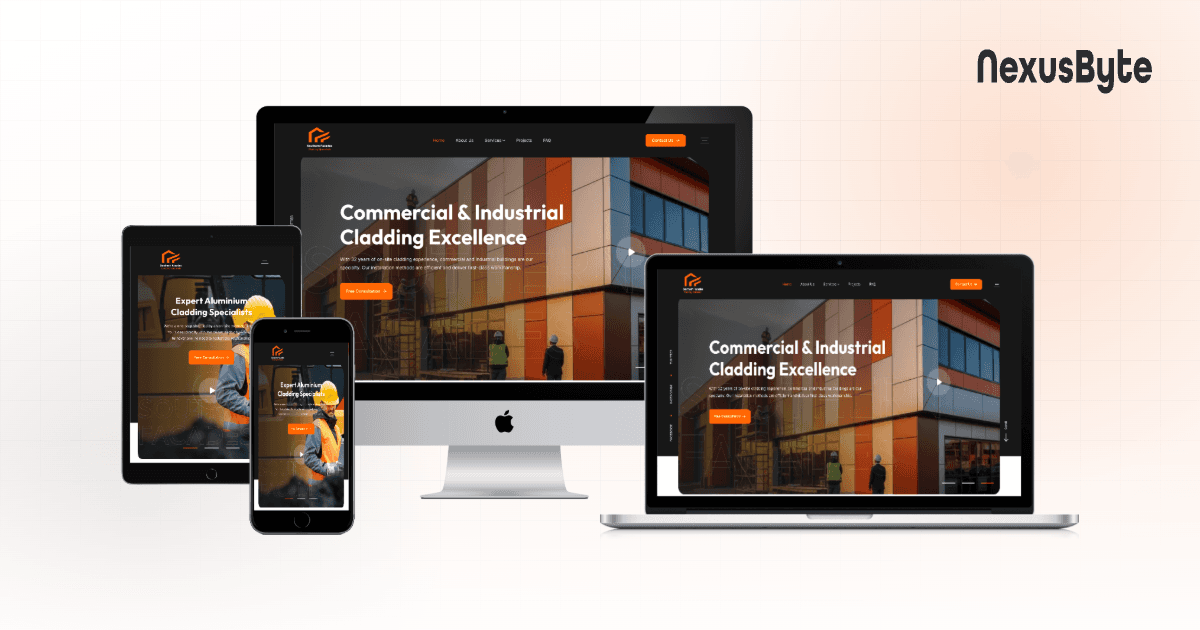
Southern Facades is a boutique cladding company working commercial and industrial buildings across New South Wales from a Wollongong base, with thirty-two years of on-site experience behind it. southernfacades.com is a Next.js build.
Precision about materials is not optional
Cladding is a subject the Australian construction industry has become extremely careful about, and rightly so. Vagueness about what is actually attached to a building has consequences that run from a stalled certification to a compliance dispute years later. That set the tone for the entire site: no loose talk about premium finishes, no generic material photography, and no describing a system by its appearance when it has a name.
So the six aluminium composite systems the company works with — Alpolic FR and NC, Vitracore G2, Vitradual, Mondoclad, Alucobond and Probond — are named individually rather than gestured at as "all major brands". A specifier or builder arriving here is checking whether this contractor works with the exact product on their drawings, and a named list answers that in seconds. It also has a quieter effect: naming products precisely is itself evidence of a contractor who thinks about compliance, which is the reassurance the reader came for.
Four services, deliberately not merged
Supply and installation, cladding replacement and refurbishment, maintenance and repair, and commercial and industrial cladding are kept as distinct services rather than blurred into one offer, because they are bought by different people for different reasons. A new installation is a builder's decision on a project already designed. A replacement is usually an owner's decision driven by a defect or a compliance requirement. Maintenance is a facilities decision on a schedule. Merging them into "cladding services" would make the site shorter and considerably less useful.
In-house CNC cutting and routing is presented as capability rather than as equipment, because on a facade the fabrication tolerance is effectively the job. Panels that arrive a millimetre out do not line up across an elevation, and the difference between a facade that looks considered and one that looks approximate is decided at the router, not on the scaffold.
Boutique without reading as small
This was the most interesting positioning problem in the project. The client's genuine differentiator is that they are boutique — a working director on site, nothing outsourced, and a deliberate cap on how many jobs run at once. For an owner who has been burned by a contractor juggling six sites, that is exactly the pitch. But the same words land differently on a commercial builder assessing whether this firm can carry their project, where boutique can read as under-resourced.
The site resolves it by refusing to argue the point and showing the evidence instead. The completed project record and the roster of recognisable national clients sit immediately beside the boutique promise, so the two are read together: this is a firm that has done the volume and now chooses to work this way. Personal service reads as a deliberate choice rather than a constraint — which is what it actually is. Coverage is stated as all regions of New South Wales from the Wollongong base, so a Sydney or regional builder is not left guessing. Positioning problems of this kind are core to our business website work.
The SEO build
The foundations are in place: canonicals on every page, a 16-URL sitemap declared in robots.txt, and a full social layer running to nine Open Graph properties and seven Twitter card fields — worth more than usual here, because facade work is shared as images between specifiers and builders rather than searched for cold. The title carries the material and the market together, aluminium composite cladding for commercial and industrial, which is the phrasing a specifier uses rather than the phrasing a homeowner would.
The page structure carries the rest. Each service and project page owns its own title, description and canonical, and the copy is written around the terms a specifier actually searches — the material system, the building class, the work type — rather than around generic cladding language. That is where the returns are in a specialist commercial market: the audience is small, technically literate and searching precisely, so matching their vocabulary matters more than volume ever will.
The Challenge Of Project
- Naming cladding systems individually rather than claiming "all major brands", in a market where imprecision about what is on a building has real consequences.
- Making a boutique, owner-on-site model read as deliberate quality to a commercial builder rather than as limited capacity to carry the job.
- Keeping installation, replacement, maintenance and commercial work as separate services, because each is bought by a different person for a different reason.
- Presenting CNC fabrication as capability rather than equipment, since on a facade the routing tolerance decides whether the elevation lines up at all.
- Serving a portfolio of large architectural photography at speed, since facade work is judged on the images long before the specification is read.