
Benefits of Custom Software Development for Businesses
You wouldn’t buy a pair of shoes two sizes too small and just hope your feet eventually change shape. Yet, business owners do exactly this every day by forcing their unique processes into generic programs. Buying off-the-shelf software feels quick and affordable initially, but it completely reverses the natural order of work. Instead of the technology serving your team, your staff ends up changing how they operate just to accommodate the rigid tool.
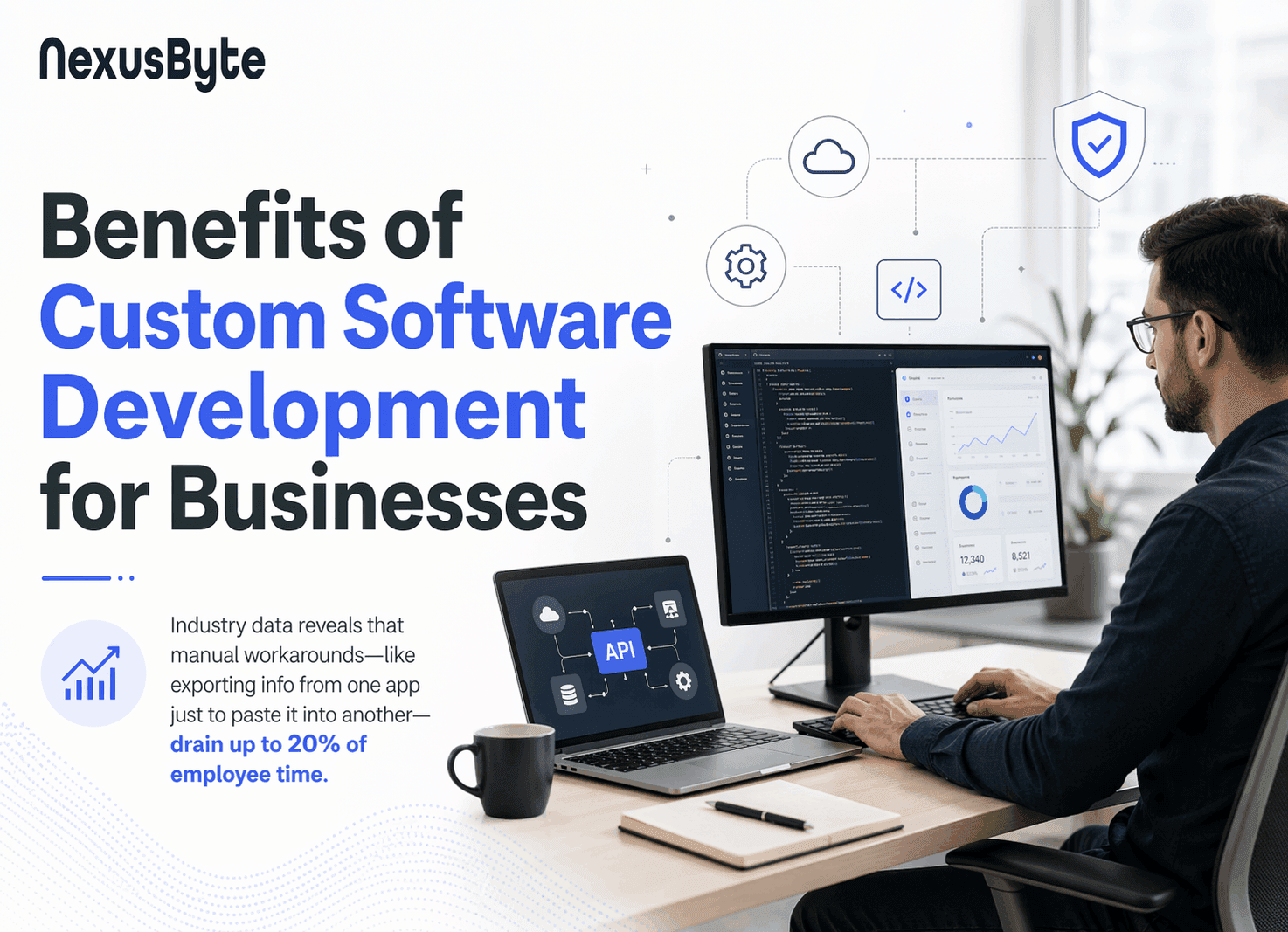
“Industry data reveals that manual workarounds—like exporting info from one app just to paste it into another—drain up to 20% of employee time.”
Industry data reveals that manual workarounds—like exporting info from one app just to paste it into another—drain up to 20% of employee time. Think about the consumer apps you use daily; every time you order a ride, you interact with an invisible engine built to make a complex process feel effortless. Generic office programs rarely offer this seamless experience for your staff. Those small daily frustrations quietly destroy productivity and cap your growth.
Shifting your mindset from a simple consumer to a software creator instantly changes this dynamic. Investing in custom software development transforms your technology from a frustrating monthly expense into a highly valuable digital asset. Tailor-made software handles your specific heavy lifting behind the scenes, allowing your staff to focus on actual results. Rather than renting space in an unyielding system, you build and own a platform designed entirely around your success.
The true benefit of custom software development is the profound relief of using a tool that actually works correctly. Your unique, streamlined workflows become a competitive moat that rival companies cannot easily replicate. Because your system is distinctly yours, it naturally acts as a smart digital transformation strategy for scalability. Choosing to build exactly what you need ensures your technology evolves smoothly alongside your rising revenue.
Custom Software vs Off-the-Shelf Software
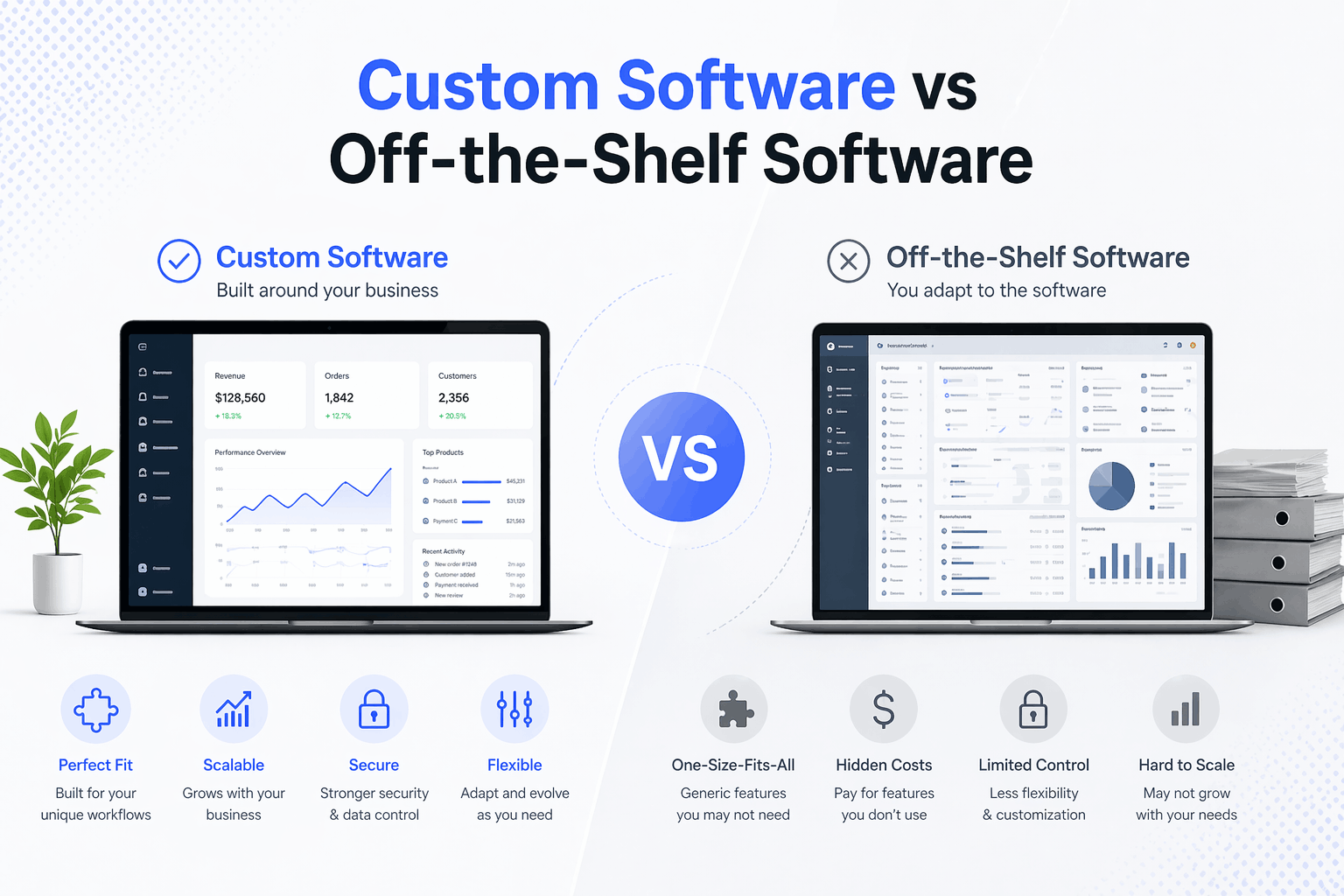
You already know the drill: sign up for a monthly software plan, pay a per-user fee, and start working. But over time, that familiar model often turns into a "subscription trap." You find yourself paying endlessly for generic programs packed with tools you never use—a frustrating problem known as feature bloat. Instead of helping your team work faster, these cluttered screens slow everyone down. When evaluating bespoke vs. off-the-shelf solutions, the core difference is fit: tailor-made tools adapt to your business, rather than forcing you to bend your daily routines to fit a rigid template.
Deciding whether to keep renting or start building requires looking closely at the long-term reality of off-the-shelf products. Consider these hidden drawbacks of generic platforms:
- Licensing fees over 5 years: A $50 monthly fee for 20 employees quietly balloons into $60,000 over five years—and you still own nothing.
- Customization limits: Your business will eventually grow to a point where generic software simply cannot handle your unique daily workflows.
- Integration difficulty: Forcing different off-the-shelf tools to share data usually requires stressful manual workarounds just to see a simple report.
Overcoming these frustrating limitations is why many businesses are exploring custom software development in Australia and worldwide. Yes, building your own system requires an upfront investment. Yet, the return on investment becomes obvious when your team reclaims ten extra hours a week using streamlined, distraction-free tools. Once you escape endless rental fees, the focus naturally shifts from temporary savings to building permanent value and owning your innovation.
Why Owning Your Software Matters
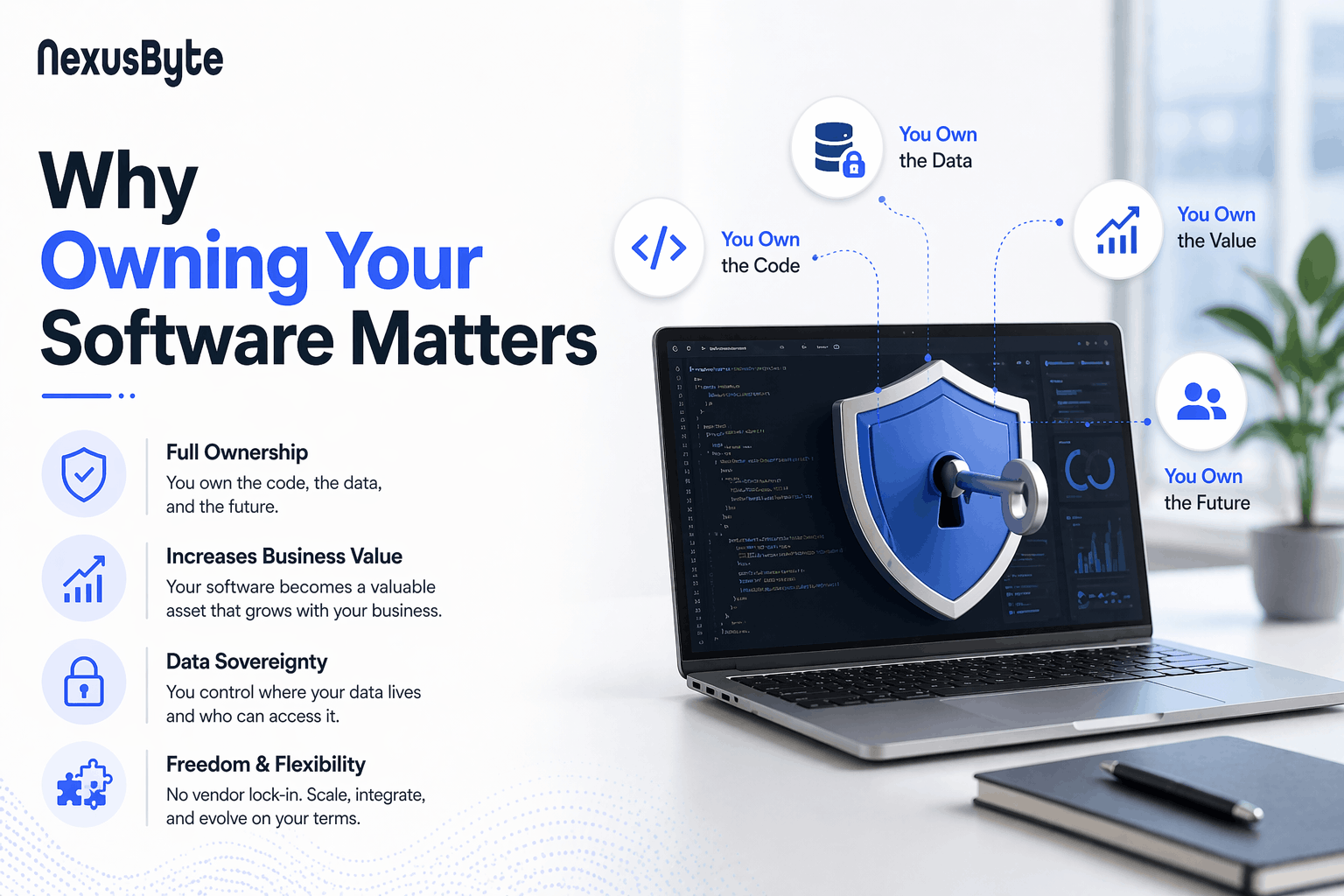
Imagine building your company’s daily workflow inside a rented office where the landlord can double the rent without warning. This is the hidden trap of vendor lock-in—a situation where relying heavily on a generic platform makes leaving impossibly expensive. When you simply rent tools, you remain at the mercy of sudden price hikes or unexpected platform shutdowns.
Shifting to a system you actually own transforms technology from a frustrating monthly expense into a permanent financial asset. By securing clear intellectual property rights in outsourced coding, your business legally owns the underlying framework running your operations. Because this unique code is an asset tailored precisely to your workflows, it directly increases your company's overall valuation on a balance sheet. Investing in custom software development solutions means you are building tangible equity in your own business rather than enriching a massive software giant.
Complete ownership also guarantees data sovereignty, meaning you have absolute control over where your digital information lives and who can access it. When you govern your foundation through custom software design and development, no third party can ever hold your confidential records hostage. With your proprietary code and data safely secured, your business is perfectly positioned to handle rapid expansion and scale without technological friction.
How Custom Software Scales With Your Business
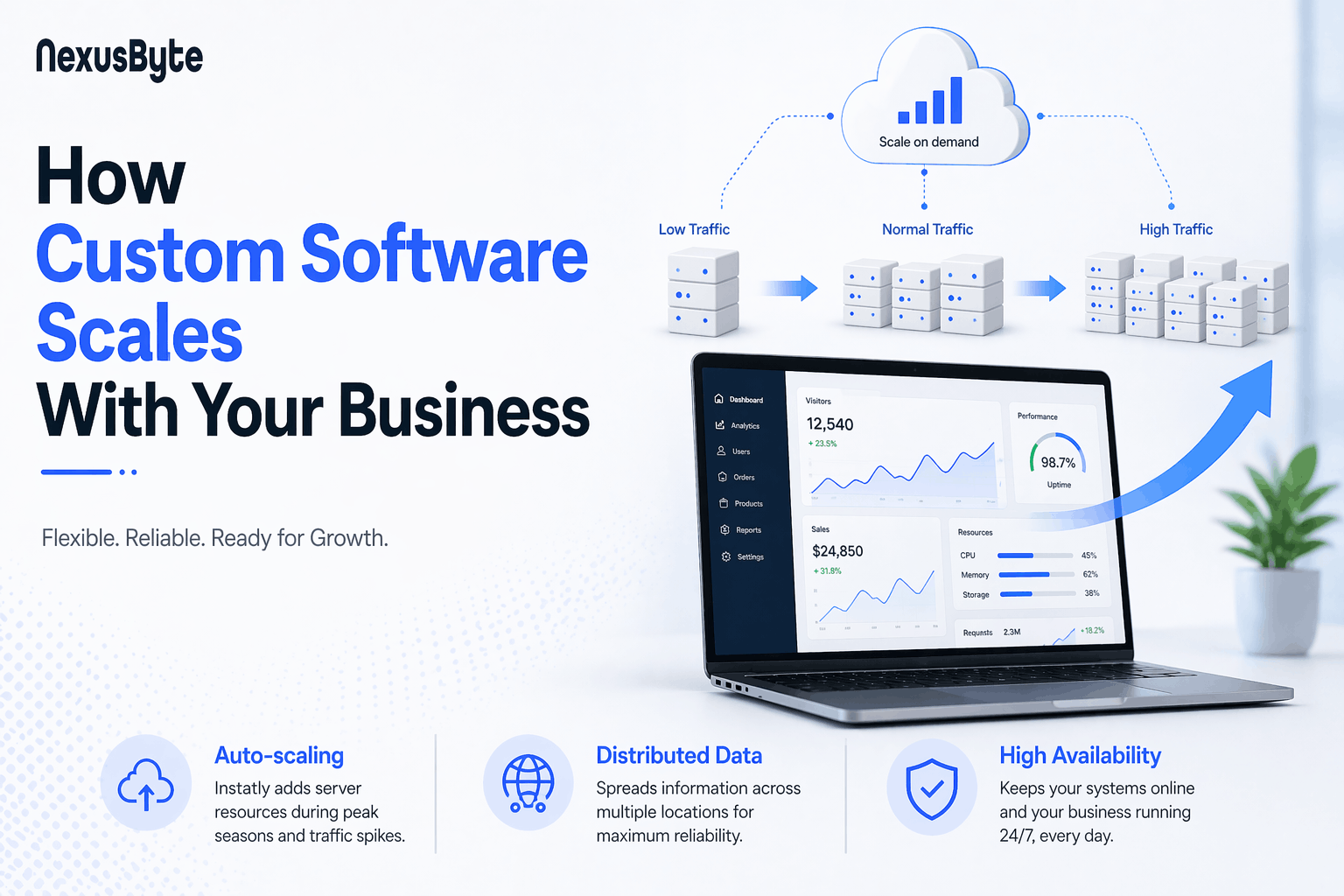
Imagine running a successful promotion, only to watch your website crash right when customers try to buy. Generic apps struggle under sudden pressure because they rely on a fixed amount of computing power. A smart digital transformation strategy for scalability fixes this through "resource elasticity." Think of this like your home’s electricity—you only pay for the extra power you actually consume during a heatwave, naturally lowering your hosting costs during normal days.
This adaptability highlights the biggest cloud-native application architecture advantages. Through modern custom software development, your tools live in a secure, digital warehouse that expands automatically. When a massive traffic spike hits, horizontal scaling kicks in. This is exactly like adding more engines to a train to carry a heavier load, rather than trying to build one impossibly large engine. Ultimately, this architecture handles sudden growth in three key ways:
- Auto-scaling: Instantly adding server resources during peak seasons.
- Distributed data: Spreading information across locations so no single failure stops operations.
- High availability: Keeping your systems online to reduce stressful downtime.
By embracing this resilient foundation, your technology never buckles under the weight of your own success. Once your app effortlessly handles high traffic, seamless communication with other internal tools ensures true automation across your entire operation.
Automate Your Business With Software Integration
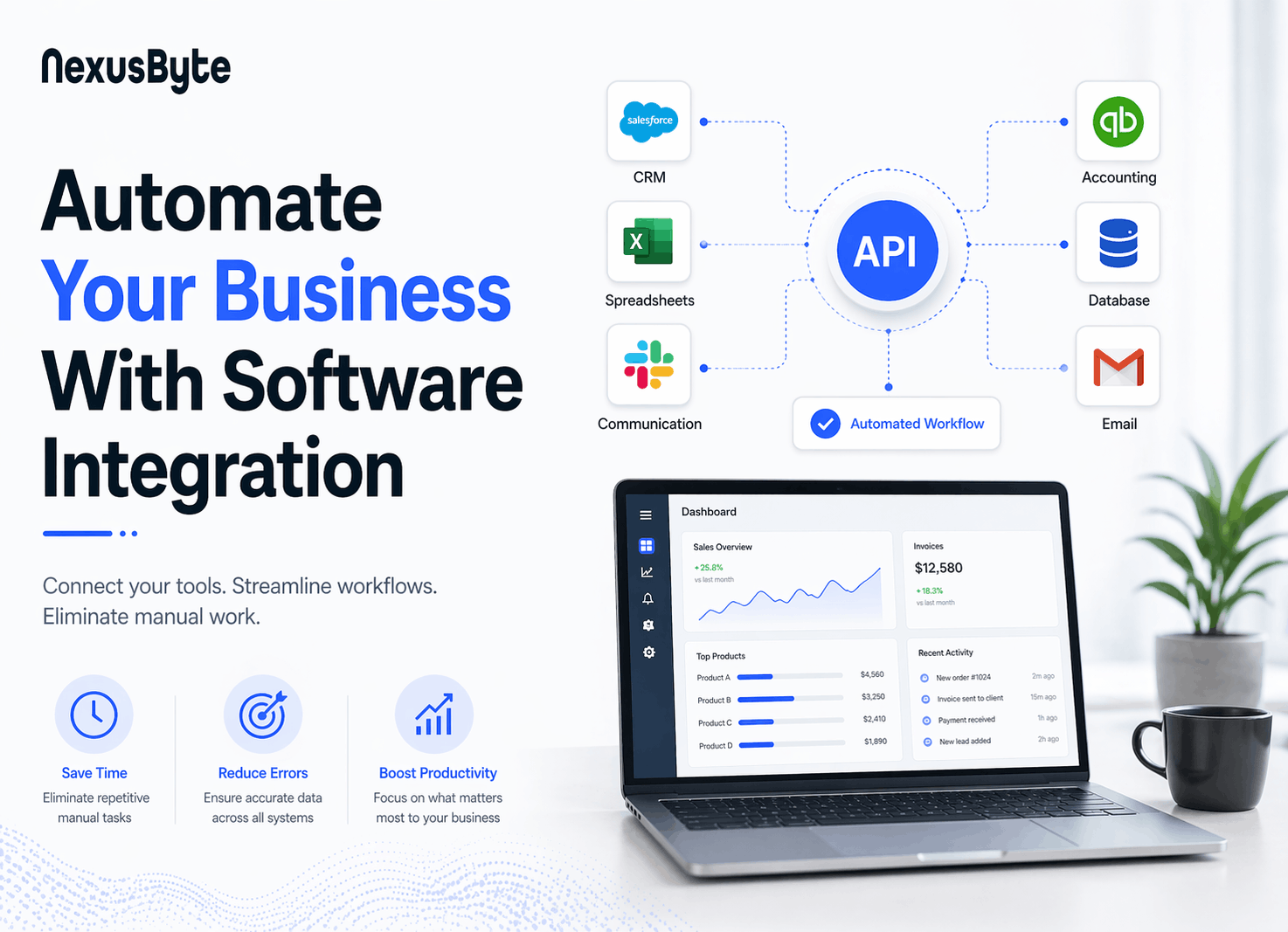
You already use multiple software tools every day, but if they do not talk to each other, your team is likely trapped in a cycle of endless manual data entry. Exporting numbers from a sales tracker just to paste them into an accounting platform creates a massive hidden cost in wasted hours and human error. When modernizing legacy business systems, identifying these slow, repetitive reporting bottlenecks is always the crucial first step toward reclaiming your time.
The most effective fix is an API (Application Programming Interface), which functions as a digital automation bridge between your disconnected apps. Think of an API exactly like a waiter in a restaurant: it takes your specific request from the dining room, delivers it to the kitchen, and brings the correct response back to your table. By letting systems smoothly pass information directly to one another behind the scenes, you eliminate the copy-paste routine and establish a reliable single source of truth for your business data.
Transforming your workflows through API integration for business process automation completely shifts how your workplace operates. Staff members are finally freed from mindless data transfer and can focus on high-value work like customer service. Whether you are exploring custom software development in Sydney or partnering globally, keeping this newly connected information safe becomes the paramount focus of your infrastructure.
Built-In Security and Reliability
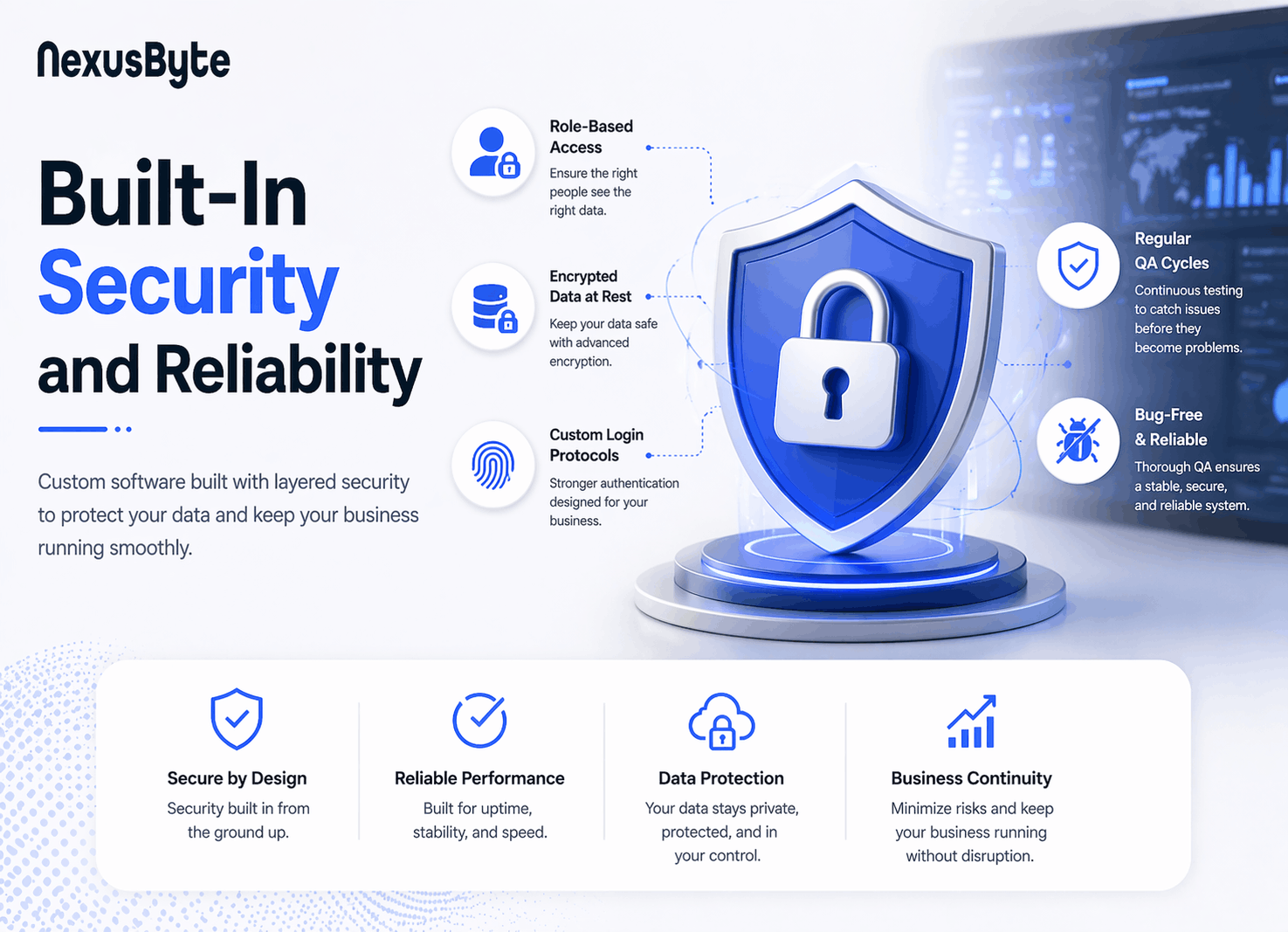
Using popular, off-the-shelf programs means sharing vulnerabilities with millions of other users. Mass-market hackers look for a single weakness to break into countless businesses at once. In contrast, custom software development solutions offer a unique defense because your system's blueprint is entirely private. Digital thieves generally prefer easy, well-known targets over spending their time trying to pick an unfamiliar, custom-built lock.
Rather than hoping generic settings keep your data safe, tailored tools let you implement security rules that match your specific team's needs. This protective foundation relies on four essential layers:
- Role-based access: Ensuring staff only see what they need for their job.
- Encrypted data at rest: Scrambling stored information so it remains unreadable to intruders.
- Custom login protocols: Creating sign-in rules unique to your workplace.
- Regular QA cycles: Consistent check-ups to find invisible weaknesses.
That final layer, Quality Assurance (QA), acts as a rigorous pre-launch stress test for your entire platform. Think of a software bug simply as a mechanical error—like a loose screw that stops a gear from turning. Thorough quality assurance and security testing protocols catch these loose screws early, preventing costly system failures once you go live. Navigating this successfully requires a structured, well-planned roadmap.
Replace Outdated Systems Without Disruption
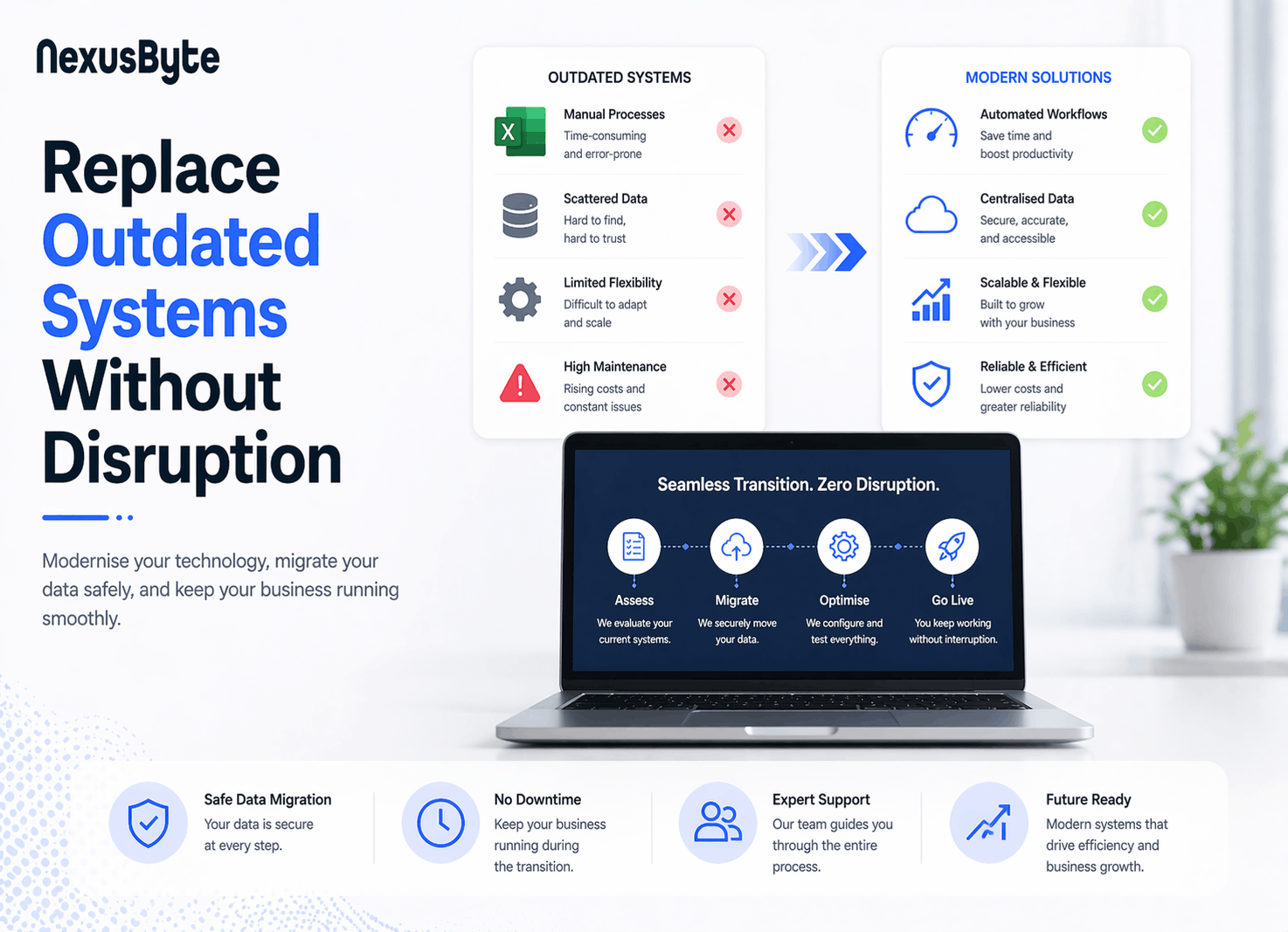
Your team's frustration with slow spreadsheets is a clear warning sign. When businesses get trapped in "Excel Hell"—patching together dozens of manual files just to function—they are running on a legacy system. This outdated technology creates "tech debt," which is like paying high financial interest just to maintain clunky tools that drain employee morale. Escaping this daily friction requires modernizing legacy business systems to permanently replace these heavy, broken processes.
Choosing how to fix this issue usually means deciding between renovating your current setup or rebuilding entirely. A smart digital transformation strategy for scalability often favors a fresh rebuild using modern, lightweight code to drastically increase system speed. Instead of continually forcing old software to do new tricks, you invest in building a clean foundation that grows seamlessly alongside your company.
Naturally, the biggest fear during this shift is losing years of vital historical records. Fortunately, a structured data migration acts like a careful moving company, safely packing up your old information and unpacking it into the new platform. Working with a reliable custom software development partner ensures this transfer happens without losing a single file. Once your data is securely housed, the focus shifts to designing tools your team actually wants to use.
Create Software Your Team Actually Wants to Use
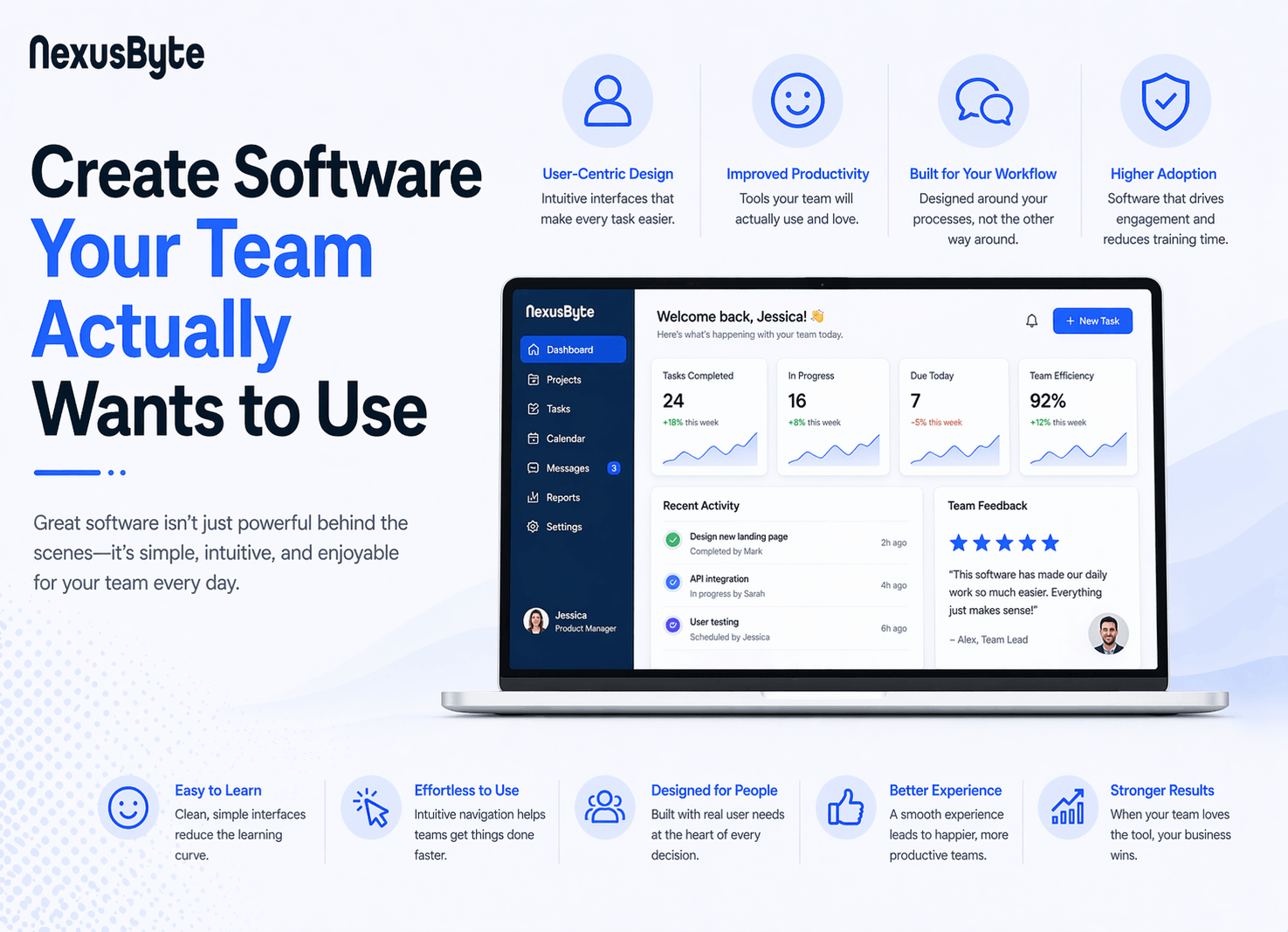
Once your data is safely moved into a new system, the real test begins: what happens when your team logs in? If you have ever abandoned a clunky app out of frustration, you know exactly why design matters. Proper custom software design and development focuses heavily on the User Interface (UI)—the screens and buttons you interact with—and the User Experience (UX), or how effortlessly those elements let you work. Truly intuitive software guides employees naturally without thick manuals, drastically lowering training costs for new hires.
Getting to that effortless feeling requires much more than picking nice brand colors. Following user experience design best practices transforms daily routines by boosting productivity and eliminating unnecessary clicks. To achieve this, designers rely on three core UI/UX principles for business tools:
- Consistency: Buttons that perform the same function always look identical.
- Clear Hierarchy: The most critical actions are always the easiest to find.
- Immediate Feedback: The system instantly confirms when your work is saved.
When custom software development prioritizes these psychological triggers, well-designed screens actively reduce human error and make complex tasks feel simple. Of course, these easy-to-use interfaces still need a powerful underlying technology stack to run efficiently.
Transforming Your Business: Your Action Plan for Custom Success
You no longer have to view technology as a frustrating compromise. You now understand that custom software development is the invisible engine powering businesses that choose a tailored fit over squeezing their workflows into a generic, two-sizes-too-small box. It isn't just a luxury reserved for massive tech giants; it is an accessible digital transformation strategy that empowers any growing business to truly own its unique processes.
Instead of treating your technology as an unavoidable monthly cost, you can now confidently approach it as a long-term asset. The ultimate benefits of custom software development emerge when you invest in a tool built specifically around your people, transforming daily operational friction into effortless momentum.
You are fully equipped to begin this process right now. Your practical 3-step starter guide:
- Audit your 'Excel Hell' points to identify major bottlenecks.
- Define one 'Core Problem' for a Minimum Viable Product (MVP).
- Schedule a discovery call with a reputable local partner.
Try looking at your daily operational headaches not as permanent roadblocks, but as the foundational blueprints for your future system. Each time you identify a broken process, you are gathering the exact information a tech partner needs to help you build a perfect solution. You are now equipped to lead confident, low-risk conversations about the tools that will shape your business's future.